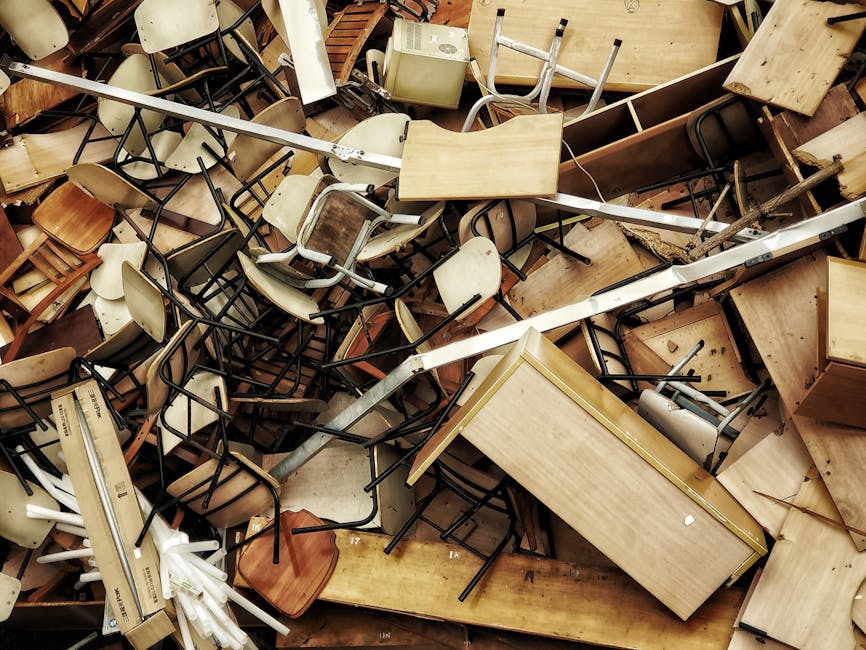
Office rubbish clearance Colliers Wood for small businesses
Running a small business in Colliers Wood usually means juggling a dozen jobs at once, and office waste is one of those things that quietly builds up until it becomes a real nuisance. Old desks, broken chairs, archive boxes, tangled cables, packaging, and the odd printer that died three months ago can start taking over valuable space. If you are looking for Office rubbish clearance Colliers Wood for small businesses, the goal is rarely just to "get rid of stuff". It is usually about making the workspace safer, tidier, more professional, and easier to run day to day.
In practice, good office rubbish clearance helps you reclaim floor space, protect staff from clutter-related hazards, and avoid messy disposal mistakes. It also helps you handle items like confidential paperwork, electrical waste, and mixed office junk in a way that feels organised rather than chaotic. This guide walks through how it works, what to watch out for, and how small businesses can choose the right disposal method without overcomplicating things. Fair warning: once an office is cleared properly, you notice the difference straight away. It feels calmer. Quieter, even.
For businesses that need a broader tidy-out, a dedicated office clearance service can be a sensible next step, especially if you are dealing with more than just a few bin bags.
Table of Contents
- Why it matters for small businesses
- How office rubbish clearance works
- Key benefits and practical advantages
- Who this is for and when it makes sense
- Step-by-step guidance
- Expert tips for better results
- Common mistakes to avoid
- Tools, resources and recommendations
- Law, compliance and best practice
- Options and comparison table
- Case study or real-world example
- Practical checklist
- Conclusion
- Frequently asked questions
Why Office rubbish clearance Colliers Wood for small businesses Matters
Small businesses do not usually have the luxury of spare rooms, storage cupboards that stretch forever, or a facilities team hiding behind the scenes. When waste starts gathering in a compact office, it affects almost everything: workflow, first impressions, and even morale. In a place like Colliers Wood, where many businesses work from practical, high-use premises, wasted space is wasted money. That sounds blunt, but it is true.
Office rubbish clearance matters because it keeps your working environment functional. A pile of old computer monitors or unsorted cardboard may not seem urgent on Monday morning. By Friday, it can be blocking access to files, cluttering walkways, and making the office look a bit tired. If clients visit, the difference is obvious. If staff work around it daily, the friction becomes normalised, which is the sneaky problem.
There is also the issue of correct disposal. Office rubbish often includes mixed materials: wood, metal, plastics, packaging, confidential documents, and electrical items. Some of those can go together; some should not. That is why using a planned clearance approach is better than ad hoc dumping. It reduces the chance of contamination, missed recycling opportunities, and disposal headaches later on.
For businesses with regular waste streams, commercial skip hire can be a practical option, especially when you need somewhere reliable to keep bulk waste while you sort the rest of the office.
Expert summary: the best office rubbish clearance is not the fastest one on paper; it is the one that clears space, protects confidential material, keeps your team moving, and avoids avoidable disposal errors.
How Office rubbish clearance Colliers Wood for small businesses Works
Most office rubbish clearance jobs follow a straightforward pattern, even if the contents look messy at first glance. The work usually starts with a quick assessment of what needs removing and whether anything requires special handling. From there, the provider decides whether the job is better suited to a man-and-van collection, a skip, wait-and-load clearance, or a more complete office clearance service.
In real life, the process is often more about sorting than lifting. A small office might have a few bags of general waste, old seating, broken furniture, and a stack of redundant storage boxes. Another office could have shredding needs, e-waste, appliances, and items that need to be kept separate for safety. The cleaner the sort, the smoother the clearance.
If access is tight, wait and load skip hire can be useful because waste is loaded quickly without leaving a skip outside for long periods. That can be particularly handy if your business is on a busy road, shares a building, or has awkward parking nearby.
For some office clearances, especially where cabinets, desks, and mixed junk need collecting in one go, a rubbish removal service can be the simplest route. The team arrives, loads the waste, and takes it away there and then. No piles left in the corner. No "we'll sort it later" promises that never quite happen.
Typical steps look like this:
- Identify what needs removing and what should stay.
- Separate confidential items, electricals, and any special waste.
- Choose the right removal method based on volume and access.
- Arrange collection at a time that will not disrupt staff or customers.
- Ensure the waste is removed, sorted, and taken to appropriate facilities.
Key Benefits and Practical Advantages
The most obvious benefit is space, but that is only the start. A well-executed clearance improves how the office feels and functions. Staff can move more freely, deliveries become easier to handle, and your business stops paying the hidden cost of clutter. Let's face it: a cramped office tends to produce cramped thinking.
Here are the main advantages small businesses usually notice:
- Better use of space - old furniture and surplus stock stop occupying working areas.
- Improved safety - fewer trip hazards, less blocked access, and fewer awkward stacks of waste.
- Professional presentation - cleaner offices look more trustworthy to clients, suppliers, and visitors.
- Lower admin stress - one planned clearance is easier than five unfinished tidy-outs.
- More efficient recycling - waste can be separated more sensibly than if it is left to pile up.
- Less disruption - fast, organised clearance means staff can get back to work sooner.
There is also a less obvious benefit: better decision-making. When an office is cluttered, people tend to postpone decisions about old equipment and surplus material. Once the space is cleared, it becomes much easier to see what is essential and what is just hanging around out of habit.
Businesses that want a more contained, secure option sometimes prefer enclosed and lockable skip hire for sensitive or high-value waste streams, especially where items must not be left exposed.
Who This Is For and When It Makes Sense
This kind of service is not just for big offices. Small businesses often need it more, simply because they have less room to absorb the mess. If your office is in Colliers Wood and you are working from a compact unit, shared commercial space, high-street premises, or a small back-office setup, clearance can make a surprisingly big difference.
It tends to make sense when you are:
- moving out of a premises
- reconfiguring desks or storage areas
- replacing furniture or IT equipment
- clearing years of accumulated paperwork and packaging
- opening a new office and need a clean start
- trying to make a cramped workspace safer and more presentable
- dealing with a sudden build-up of bulky rubbish after a busy period
There are also practical seasonal moments when businesses finally act. End-of-financial-year tidying is one. Another is just before a lease check or office refit. Around that point, the room tends to tell the truth. You know the one - two broken chairs behind the copier, a wobbling pedestal drawer, and a box of cables nobody admits owning.
If your office waste includes items that cannot be mixed with general rubbish, such as bulky electrical items or anything potentially sensitive, it is worth checking whether a more tailored service is needed. Confidential shredding is particularly useful if old files and paper records are part of the clearance.
Step-by-Step Guidance
If you want office rubbish clearance to run smoothly, a small amount of planning goes a long way. It does not need to be dramatic. You do not need a colour-coded spreadsheet unless you really want one. But a sensible process avoids wasted time and last-minute confusion.
1) Walk the office and list everything to remove
Start by walking through the space with fresh eyes. Write down furniture, bags, boxes, electronics, shelving, and anything stacked in cupboards. The goal is to separate "definitely going" from "maybe later".
2) Separate waste types early
Put confidential paperwork, electrical items, metal fixtures, and general rubbish into different groups where possible. This helps with recycling and prevents awkward sorting on collection day. It is one of those little jobs that saves time later, always.
3) Decide what needs specialist handling
Not everything belongs in a standard mixed load. Old fridges, damaged appliances, and some types of hazardous waste need specific treatment. If you are not sure, it is better to ask before collection than to guess and cause a problem.
For appliance-heavy clearances, fridge and appliance removal is a smarter choice than trying to bundle those items into general office waste.
4) Choose the right method
For a small office with limited waste, a man-and-van style collection may be enough. For bigger clean-outs or mixed bulky waste, a skip or complete clearance service may work better. If access is awkward, think about timing, parking, and whether loading needs to happen quickly.
5) Book a slot that avoids disruption
Many businesses choose early morning, lunchtime, or after-hours clearance. That keeps the workflow steady and avoids having waste moved while clients are waiting at the front desk. A bit of scheduling care, honestly, saves a lot of irritation.
6) Confirm what happens after collection
Good providers should be clear about sorting, recycling, and disposal pathways. You do not need every operational detail, but you should know that waste is being handled properly and not simply dumped into the nearest bin chain.
Expert Tips for Better Results
In our experience, the best office clearances are the ones where the business has made a few calm decisions beforehand. Not perfect decisions. Just sensible ones.
- Label keep, donate, recycle, and remove - even rough labels reduce confusion on the day.
- Pull confidential files early - do not leave sensitive documents mixed into general paper waste.
- Check access points - lifts, stairwells, rear entrances, and parking can all affect the job.
- Measure bulky items if needed - a wide desk or cabinet can be a problem on narrow stairs.
- Plan for hidden waste - under desks, behind cabinets, and in storage cupboards is where the surprise clutter lives.
- Keep recyclables clean where possible - cardboard and metal are easier to process when not contaminated with food waste or liquids.
One practical tip that often gets overlooked: clear the "decision pile" first. That is the area where everyone dumps items they are not sure about. Once that pile is gone, the rest of the office feels much more manageable. Funny how that works.
If you want to keep waste under control over time, waste recycling services can support a more structured approach rather than treating every tidy-up as a one-off scramble.
Common Mistakes to Avoid
Most office clearance problems come from rushing, not from bad intentions. The wrong choices tend to look harmless at the start, then become annoying later on. Very annoying.
Watch out for these common mistakes:
- Leaving clearance too late - if you wait until the office is overflowing, the job becomes slower and harder.
- Mixing everything together - this makes recycling harder and increases the chance of errors.
- Forgetting about confidential material - papers and storage media need more care than general waste.
- Ignoring access issues - a simple collection can turn awkward if parking or entry is not planned.
- Assuming all waste can go anywhere - electricals, appliances, and certain materials may need separate handling.
- Choosing only on price - the cheapest option is not always the easiest, safest, or least disruptive.
Another mistake is treating office rubbish as if it were domestic clutter. Sometimes that is close enough, but often it is not. Small businesses generate a weird mixture of things that straddle the line between office junk, confidential material, and commercial waste. So a bit of care helps.
Tools, Resources and Recommendations
You do not need fancy kit to organise an office clearance, but a few basic tools make the process much easier. Think practical rather than perfect.
- Sticky labels or marker pens - for sorting items by category.
- Heavy-duty sacks or boxes - useful for paper waste, cables, and mixed small items.
- Basic inventory list - even a simple sheet helps you track what is leaving.
- Camera on your phone - quick photos help you remember what was agreed, especially for bulky items.
- Lockable storage or shredding bins - ideal for any files you are not ready to release yet.
For office waste that involves furniture, personal items, or a broader reset, an office clearance service is often the most efficient choice because it reduces the number of separate jobs you need to coordinate.
If you are comparing ways of moving waste out of a premises, a general man and van collection may suit smaller loads, while a skip hire setup may be better if you want a fixed container on site for a day or two.
Law, Compliance, Standards, or Best Practice
Office rubbish clearance in the UK is not just about tidiness. Businesses have a duty to dispose of waste responsibly, and in practice that means making sure rubbish is handled by an appropriate carrier, sorted sensibly, and not left in a way that creates risk. The details can vary depending on the material and the circumstances, so caution is the right approach.
For small businesses, the main best-practice points are straightforward:
- Keep confidential information secure until it is destroyed or transferred safely.
- Separate hazardous or specialist waste from general office rubbish.
- Use reputable waste handling arrangements for commercial premises.
- Do not assume all electrical items can be treated as general waste.
- Keep records of what was removed if your business processes require it.
Health and safety is relevant too. A clearance should not create blocked exits, unstable stacks, or lifting risks for staff. If the office contains heavy furniture or awkward items, let trained people handle the removal rather than improvising with a trolley and crossed fingers.
For businesses that want more reassurance around operational standards, it can help to review a provider's published policies, such as health and safety policy, insurance and safety, and payment and security. Those pages are not just paperwork; they tell you a lot about how a company works.
Options, Methods, or Comparison Table
There is no single right answer for every office. The best method depends on access, volume, confidentiality, and how quickly you need the space cleared. Here is a simple comparison that may help.
| Method | Best for | Pros | Considerations |
|---|---|---|---|
| Rubbish removal | Small to medium mixed office waste | Fast, flexible, minimal disruption | May suit less bulky jobs better |
| Office clearance | Full room, floor, or premises clear-outs | Comprehensive and organised | Best when you want more than simple collection |
| Wait and load skip hire | Sites with limited space or parking | Quick loading, no long on-street storage | Needs good timing and immediate access |
| Commercial skip hire | Ongoing or larger office waste volumes | Useful for staged sorting and bulky loads | May require more planning and possibly a permit |
| Confidential shredding | Paper records and sensitive documents | Better protection for private information | Should be separated from general rubbish |
If your office is small and your waste is mixed, the "best" method is often the one that saves you time without creating extra admin. That sounds obvious, but people often pick a method that looks cheap upfront and then spend all week working around the mess.
Where bulky waste needs a quick exit from a tight space, same day skip hire can be worth exploring, although it is not the right answer for every office layout.
Case Study or Real-World Example
Picture a small marketing agency in Colliers Wood moving from a cramped shared office into a slightly bigger unit. They had four old desks, a stack of packaging, two broken task chairs, a dead printer, a few boxes of paper records, and a tangle of cables nobody wanted to touch. Nothing dramatic. Just the sort of accumulation that happens when everyone is busy.
At first, the team planned to do it themselves over several evenings. In theory, easy. In reality, it meant staff staying late, leaving bags near the fire exit, and arguing about what should be kept. The office looked half-cleared for days, which made the whole place feel more stressful than before.
They eventually switched to a structured clearance approach. Confidential papers were separated for shredding, recyclable cardboard was grouped together, and the bulky furniture was removed in one planned visit. The result was not just a cleaner office. It was a quieter one. People could actually hear each other again across the room. A small thing, but it mattered.
That is the real value of office rubbish clearance for small businesses: not just fewer items in the space, but less mental clutter too.
Practical Checklist
Use this checklist before booking your office rubbish clearance:
- List every item that needs removing.
- Separate confidential documents from general waste.
- Identify furniture, electricals, and bulky items.
- Check whether anything needs specialist disposal.
- Measure access points, stairwells, and lift sizes if needed.
- Decide whether you need a full clearance or a smaller collection.
- Choose a time that will not disrupt customers or staff.
- Confirm how waste will be sorted and processed.
- Keep anything you want to retain in a clearly marked area.
- Make sure the office is ready before the team arrives.
If you are still unsure which option fits best, it can help to review what can go in a skip so you are not guessing on the day. That one small check prevents a surprising amount of confusion.
Conclusion
Office rubbish clearance Colliers Wood for small businesses is really about control. Control over space, over workflow, over confidentiality, and over how your workplace feels to the people using it every day. Done well, it clears more than waste. It clears the room to think, move, and work properly.
Whether you are tidying a single office, moving premises, or just trying to stop clutter from taking over, the smartest approach is the one that fits the actual job in front of you. Not too much, not too little. Just practical, measured, and tidy in the best sense of the word.
If you want a smooth next step, compare your waste volume, access, and timing first. That simple check will point you toward the right solution far more reliably than guessing ever will. And once it is done, you will feel the difference almost immediately.
Get a free quote today and see how much you can save.
Frequently Asked Questions
What does office rubbish clearance usually include?
It usually includes the removal of general office waste, old furniture, packaging, boxes, and sometimes electrical items. If confidential paperwork or specialist waste is involved, those items may need separate handling.
Is office rubbish clearance suitable for very small businesses?
Yes. In fact, small businesses often benefit the most because they have less space to absorb clutter. Even a modest clearance can make the office feel much easier to work in.
How is office waste different from domestic rubbish?
Office waste often includes a mix of furniture, IT equipment, paper records, and commercial packaging. That mix makes planning a little more important than with ordinary household clutter.
Can confidential documents be removed during an office clearance?
They can, but they should be separated and handled appropriately. Confidential shredding is a better fit for sensitive paperwork than simply mixing it into general waste.
What is the best option if I have bulky office furniture?
For desks, chairs, cabinets, and similar items, a full office clearance or rubbish removal service is often easiest. The right method depends on quantity, access, and timing.
Do I need a skip for office rubbish clearance?
Not always. Some businesses prefer a skip, while others find a collection service or wait-and-load arrangement more convenient, especially if access is tight.
How far in advance should I book office rubbish clearance?
It is sensible to book as early as you can, especially if you need a specific day or time. Small offices often work best with clear scheduling because disruption is easier to avoid.
What should I separate before the clearance team arrives?
Separate confidential papers, electrical items, and anything you want to keep. If possible, group similar items together so the collection is quicker and less messy.
Can office rubbish clearance help with recycling?
Yes. Sorting waste properly makes recycling easier and reduces unnecessary landfill. Cardboard, metal, and some office equipment can often be handled more responsibly when they are not mixed with general waste.
Is there any compliance issue small businesses should worry about?
Small businesses should take waste handling seriously, especially for confidential material, electrical items, and anything that may be classed as special or hazardous. Good practice is to keep waste separated and use a suitable disposal method.
What if my office has awkward access or limited parking?
That is where planning matters. Wait-and-load or a tailored removal service may be better than leaving a skip outside for too long. Access details should always be mentioned before the job starts.
How do I choose between office clearance and rubbish removal?
Choose office clearance if you need a fuller, more organised solution for a room or premises. Choose rubbish removal if you mainly need mixed items taken away quickly with minimal fuss.
One last thought: a clear office rarely feels dramatic on paper, but in real life it changes the pace of the day. And that is often exactly what a small business needs.